Nobody wants to start their week like this.
You unlock the front door on a Monday morning, step inside, and immediately know something is wrong. A broken window. Shelves emptied out. Equipment missing from where you left it Friday afternoon. You pull up the security footage and watch the whole thing play out, clear as day, while you were gone and no one was watching.
That’s the brutal reality of most business security setups. The cameras saw everything. They recorded everything. And they did absolutely nothing to stop it.
If that scenario makes you uncomfortable, it should. Because it happens more often than most business owners want to admit, and the fix is simpler than you might think.
What Live Video Monitoring Actually Means
Let’s clear something up first. Live video monitoring is not the same as having security cameras. Most businesses already have cameras. What they don’t have is someone actually watching them.
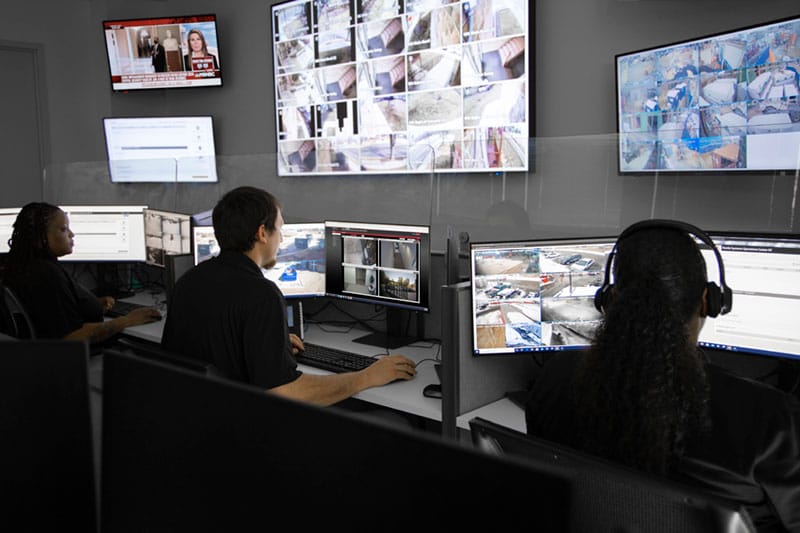
Live video monitoring services put real, trained people in front of your camera feeds around the clock. Not reviewing footage the next morning. Not checking in once in a while. Watching, right now, as things happen.
When an operator spots something that looks off, they don’t write it up in a report for someone to read tomorrow. They respond immediately. They can speak directly through speakers installed at your property, warning anyone on site that they’ve been seen. They can call your staff. They can contact the police and give a live, accurate description of exactly what’s unfolding and where.
That’s the fundamental difference a live video monitoring system makes. It turns your cameras from a recording device into an active line of defence.
Walking Through How It Actually Works
It’s worth understanding the mechanics, because the process is more straightforward than most people expect.
Cameras go up at the points that matter most. Entrances. Car parks. Loading areas. Stockrooms. Back doors. These are modern cameras too, not the blurry, grainy ones people imagine when they think of CCTV. High definition, wide angle, built for low light and night conditions.
Those feeds connect in real time to a professional monitoring center. Operators there are watching multiple views at once, and they’re trained specifically to notice the things that feel wrong. Someone sitting in a parked car for too long. A figure moving along the perimeter of your building after closing. A door that should be locked standing open.
The moment something looks suspicious, live video security monitoring operators have tools at their disposal that most people don’t realise exist. On-site audio announcements. Direct lines to your emergency contacts. Real-time communication with local police. All of it happening within seconds, not the following morning.
On top of that, most modern setups now include AI-enhanced live video monitoring running alongside the human operators. The AI handles the things that would otherwise waste everyone’s time, a fox cutting across the car park, a flag snapping in the wind, shadows from passing cars. It filters all of that out and surfaces only what actually deserves attention. The result is faster responses and far fewer false alarms.
The Reasons Businesses Are Moving Away from Basic CCTV
The deterrence factor alone is worth talking about. Criminals are not random. They choose targets they believe are easy, unmonitored, and low risk. When your premises is visibly covered by cameras and clearly signposted as being actively monitored, a significant portion of would-be intruders simply don’t chance it. They find somewhere less protected.
That’s not wishful thinking. That’s how it plays out in practice, time and again.
Then there’s the timing problem. The vast majority of break-ins, vandalism, and theft happen at night, on weekends, and over public holidays. The exact times your business is empty and your cameras are recording to a hard drive that nobody is watching. 24/7 live monitoring services exist precisely to cover those hours. There is no quiet window. There is no unguarded stretch of time. Coverage is continuous, full stop.
Cost is another factor that surprises people. The knee-jerk assumption is that proper security must be expensive, but compare it honestly to the alternative. Hiring guards to cover every overnight shift, every weekend, every bank holiday, across every location you operate, adds up to a significant ongoing expense, and that’s before you factor in the reliability issues, the sick days, the scheduling headaches. Remote live monitoring services deliver the same consistent coverage, often for considerably less, and without any of those management problems.
There’s also a side of this that people don’t think about until they desperately need it. Security camera monitoring services generate real evidential records. Not just video files, but in many cases, written incident reports created by operators in real time as events unfolded. Timestamped. Detailed. Professional. If you ever find yourself dealing with an insurance claim, a liability dispute, or a criminal prosecution, that documentation can make an enormous difference to the outcome.
And AI-enhanced live video monitoring has genuinely expanded what’s possible on the detection side. Instant alerts when someone crosses a perimeter line after hours. Automatic recognition of licence plates at your entry points. Behavioural analysis that picks up on loitering well before anything has actually happened. These features have moved from cutting-edge to standard in a relatively short space of time, and the better CCTV monitoring services have them built in.
The Kinds of Businesses That Benefit Most
The honest answer is that it’s a longer list than most people assume.
Retailers dealing with shoplifting and overnight break-ins. Warehouses trying to protect large sites and high-value loading areas. Construction companies whose equipment gets targeted repeatedly because it sits unattended on open sites. Car dealerships with forecourts full of stock. Healthcare providers with round-the-clock safety responsibilities. Restaurant groups and hospitality businesses spread across multiple sites. Schools. Business parks. Data centres.
If your business has things worth protecting and there are hours when no one is physically present, remote live monitoring services can be configured around your specific premises, your hours, and your risk areas.
But Don’t My Existing Cameras Already Do This?
This is the question that comes up most often, and it’s worth being direct about the answer.
No. They don’t.
Standard CCTV records what happens. It doesn’t respond to what’s happening. If someone breaks into your premises at 2am, your cameras will capture excellent footage of the whole event. But no one intervened. No warning was issued. No call was made. By the time anyone reviews that footage, everything has already happened.
A CCTV live monitoring service means someone was watching at 2am. Someone noticed. Someone acted.
That’s not a minor upgrade. That’s a completely different category of protection.
Feature | Traditional CCTV | Live Video Monitoring |
Records footage | Yes | Yes |
Watched in real time | No | Yes |
Immediate response | No | Yes |
AI-powered detection | Rarely | Commonly included |
Round the clock active coverage | No | Yes |
Actively deters crime | Moderate | High |
Professional incident reports | Rarely | Yes |
What to Ask Before You Choose a Provider
The quality of security camera monitoring services varies more than the marketing might suggest, so it pays to ask the right questions before you commit to anything.
How quickly do operators respond when an alert is triggered? Are their monitoring centers independently certified? How does their AI work in practice, and has it measurably reduced false alarms for their existing clients? What happens if their primary monitoring center has an outage? Can you access your own live feeds and incident history from your phone? And what does the contract actually look like if you need to leave?
A provider that’s confident in what they offer won’t have any trouble answering these questions clearly. One that gets evasive or vague is telling you something important without meaning to.
Is It Actually Worth It?
For the overwhelming majority of businesses, yes. Without hesitation.
Live video monitoring services combine human judgement with technology in a way that passive systems simply cannot replicate. You get continuous awareness, immediate response capability, a professional evidential record, and a deterrent effect that works around the clock, including all the hours you’re not there.
24/7 live monitoring services don’t patch the gaps in your security. They remove the gaps entirely.
If you’ve been relying on a standard CCTV setup and quietly hoping nothing happens, it might be worth having an honest conversation about what genuine, professional live video monitoring would look like for your business. The cost of getting it right is manageable. The cost of finding out too late that no one was watching is something else entirely.
Thinking about making the switch? A certified security consultant can walk through your site, identify the gaps, and put together a monitoring plan built around how your business actually operates.
FAQ
Frequently asked questions
A virtual assistant is a remote professional who handles tasks that don’t necessarily need to be done by you. They can manage emails, schedule meetings, handle customer inquiries, manage social media, bookkeeping, project coordination, and other administrative work to free up your time for high-impact activities.
- Crystal Clear High Definition Video Surveillance
- Seamless Real Time Remote Monitoring
- Expansive Wide Angle Security Coverage
Traditional CCTV only records footage for later review. Live video monitoring adds real-time observation by security professionals who can respond to incidents as they happen, preventing crime instead of just documenting it.
Live video monitoring offers several advantages including real-time threat detection, faster response to suspicious activity, reduced theft and vandalism, AI-powered alerts, and 24/7 protection even when your business is closed.
AI-enhanced live video monitoring uses artificial intelligence to analyze camera feeds and detect unusual behavior such as loitering, perimeter breaches, or unauthorized access. It reduces false alarms by filtering out irrelevant movements like animals or shadows.
When suspicious behavior is detected, monitoring operators can issue live audio warnings through on-site speakers, notify business owners, and contact local law enforcement with real-time details about the incident.
Yes. Solar CCTV camera saves on fuel and wiring, infrastructure and have long term cost benefits and sustainability.