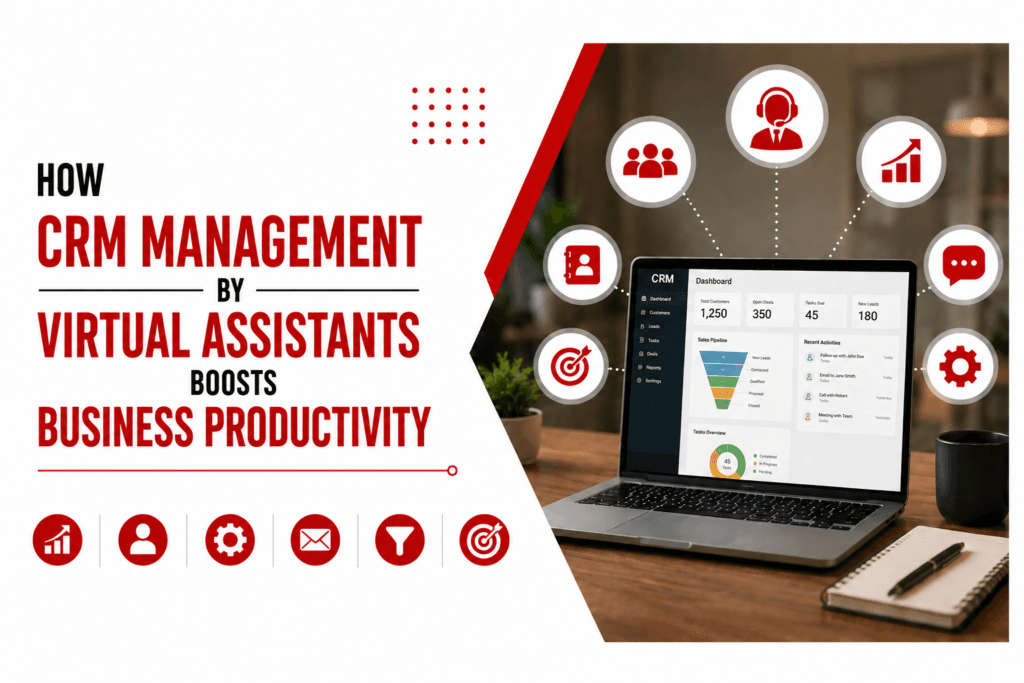
Client details scattered across spreadsheets, half-finished notes, an inbox nobody’s cleaned in months. Most business owners know that feeling, chasing information that should already be sitting there, organised. That’s basically where crm management services come in, taking the daily grind of updating records and tracking conversations off your plate entirely.
Bringing in virtual assistant crm management doesn’t mean handing over control of your customer data to a stranger. It’s more about having someone reliable keep it accurate and current, so your team stops hunting for details and actually gets on with closing deals. Businesses that invest properly in crm support services tend to notice fewer missed follow-ups pretty quickly, and a lot less duplicate junk cluttering up the system.
This piece looks at how a decent crm virtual assistant fits into the daily grind, what they actually spend their time doing, and how crm data management services genuinely move the needle rather than just becoming another tool nobody bothers using. If your CRM feels more like a burden than a benefit right now, this should help.
What CRM Management Actually Involves
A CRM, at its core, holds everything about your customers in one spot, contact details, past conversations, deal stages, follow-up dates. Trouble is, most CRMs are only as good as the data sitting inside them. Leave it unattended, and fields go blank, duplicate contacts start piling up, and the system meant to save time ends up costing more of it instead.
This is exactly where crm management services earn their keep. Instead of a busy sales rep squeezing updates in between calls, someone’s actually dedicated to keeping records clean and useful for decision-making. Sounds simple enough, but the day-to-day difference is bigger than most people expect.
Why Businesses Turn to Virtual Assistant CRM Management
A full-time CRM administrator rarely makes sense for small or mid-sized businesses, honestly. The workload just doesn’t justify a full salary, but the tasks still need doing, and doing consistently. That gap is pretty much why virtual assistant crm management has picked up so much over the past few years.
A remote assistant trained on whatever CRM you’re using- HubSpot, Salesforce, Zoho- doesn’t matter which- can handle the daily upkeep without the overhead that comes with an in-house hire. They log calls, update deal stages, tag leads properly, flag anything that looks off before it turns into a bigger mess.
What a CRM Virtual Assistant Actually Does Day to Day
The actual day-to-day work of a crm virtual assistant covers more ground than most owners expect going in. Typically it looks something like:
- Updating contact records after calls or meetings
- Merging duplicate entries so reporting stays accurate
- Tagging and segmenting leads based on behaviour or source
- Setting reminders for follow-ups so nothing slips through
- Pulling basic reports on pipeline health or conversion
- Cleaning out inactive or outdated records now and then
None of that is complicated on its own, not really. What makes it valuable is consistency. A CRM updated properly every single day, rather than in one rushed catch-up session a month, gives a much clearer picture of where the business actually stands.
Choosing Between General Support and Specialised CRM Support Services
Not every virtual assistant can handle CRM work well, and that’s worth saying upfront. General admin support covers emails and scheduling just fine, but CRM systems have their own logic, their own workflows, and reporting quirks that take real experience to get right.
That’s why crm support services built specifically around CRM platforms usually deliver better results than handing it to a generalist VA and hoping for the best. Someone who already understands pipeline stages, lead scoring, and automation triggers will spot problems a generalist would completely miss, like an automation quietly firing off the wrong follow-up email for weeks without anyone noticing.
The Role of CRM Data Management Services in Growth
As a business grows, so does the flood of data hitting the CRM. New leads, repeat customers, support tickets, marketing responses- it all needs somewhere to live and someone actually keeping it straight. This is where crm data management services stop being a nice-to-have and start being closer to essential.
Bad data quality has real consequences too. Sales chase leads that already converted somewhere else. Marketing sends campaigns to segments that are years out of date. Reports show numbers nobody quite trusts anymore. Dedicated data management catches this stuff early, before the CRM turns into a graveyard of half-finished entries.
Common Mistakes Businesses Make With CRM Upkeep
A lot of businesses set up a CRM with the best intentions, then let it slide once the initial excitement wears off. Same patterns show up again and again: skipping regular data cleanup, letting different team members enter information however they feel like it, never actually reviewing which fields matter versus which ones just clutter the whole thing up.
Bringing in dedicated support early, rather than waiting until the CRM’s basically unusable, saves way more time than it costs. A quick weekly check on data quality catches small issues before they snowball into a system nobody trusts anymore. Businesses treating crm management services as an ongoing habit, not a one-off fix, tend to get a lot more value out of their software long term, simply because the data stays reliable enough to actually act on.
Making the Most of Your CRM Investment
A CRM only really pays off when the data inside it can be trusted, and that takes ongoing attention, not a one-time setup and forget it. Bringing in crm management services gives your team something they can rely on daily, rather than a system that quietly falls apart between quarterly clean-ups.
If your business is juggling growing lead numbers without the budget for a full-time hire, virtual assistant crm management is a pretty practical middle ground: skilled support minus the overhead. Start by figuring out where your current habits are slipping, whether that’s inconsistent data entry or follow-ups that never happen, then bring in crm support services built around fixing exactly that.
Get a crm virtual assistant involved early, before things pile up, and it tends to pay for itself fast. Solid crm data management services turn your CRM back into what it was always meant to be, a genuine source of truth your whole team can actually act on.
FAQ
Frequently asked questions
A virtual assistant is a remote professional who handles tasks that don’t necessarily need to be done by you. They can manage emails, schedule meetings, handle customer inquiries, manage social media, bookkeeping, project coordination, and other administrative work to free up your time for high-impact activities.
- Crystal Clear High Definition Video Surveillance
- Seamless Real Time Remote Monitoring
- Expansive Wide Angle Security Coverage
Updating contact records, merging duplicates, tagging leads, chasing follow-ups, pulling basic reports on pipeline activity. Most of the routine stuff that keeps a CRM accurate day to day.
Usually yes, especially once lead volume gets past what one person can manage on the side. Often way cheaper than a full-time hire while the data still stays properly maintained.
HubSpot, Salesforce, Zoho, and Pipedrive tend to be the common ones, though a decent crm virtual assistant should pick up most platforms fine with a bit of onboarding.
General admin handles emails and scheduling. Crm support services need someone who actually understands pipeline stages, lead scoring, automation, stuff a generalist VA usually hasn't touched before.
More leads and more customers mean more data flooding in constantly. Without proper management, duplicate entries and outdated records pile up fast, and reports start showing numbers nobody believes.