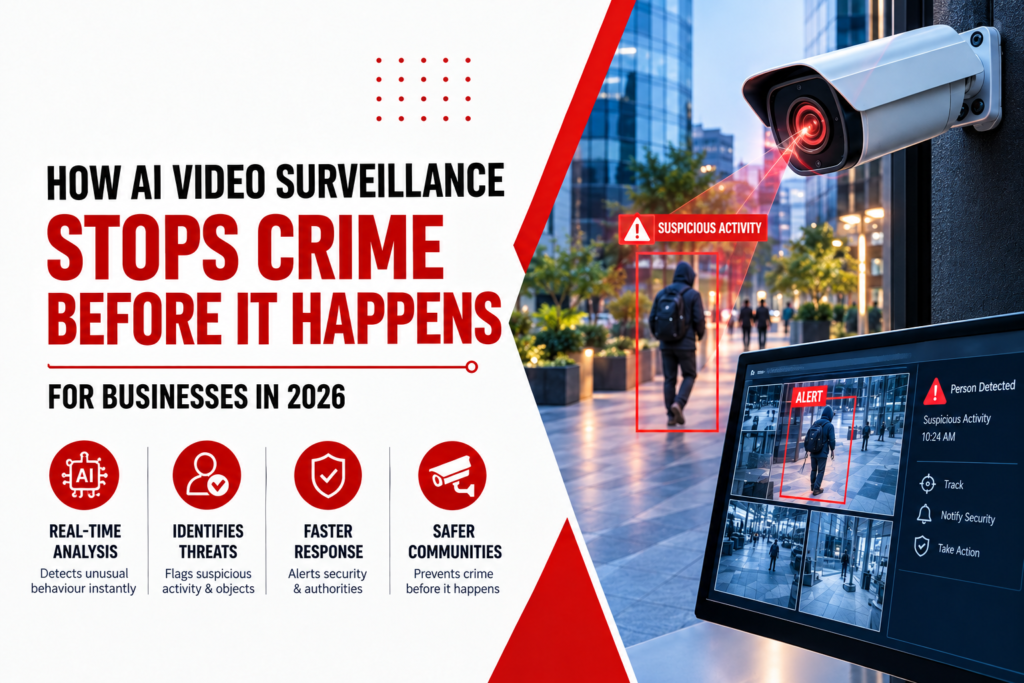
Old CCTV had one job. Record, and hope someone reviews the tape before it’s too late. Most of the time, nobody does until after a break-in, and by then the damage is already done. AI video surveillance works differently. It watches live footage as it comes in, notices when something doesn’t look right, and sends an alert while there’s still time to act.
That difference matters more than people think. A break-in caught at the fence line costs a fraction of one discovered the next morning by whoever opens up. AI powered video surveillance leans on motion tracking, object recognition and pattern detection to catch risk in seconds, not after the fact.
This article gets into how smart video surveillance actually stops crime rather than just filming it. We’ll cover how it works, how it’s different from a standard camera setup, and what’s actually worth checking before you commit to video surveillance services. If you run a warehouse, a shop, or an office, it’s worth knowing what you’re really paying for.
What Is AI Video Surveillance?
A normal CCTV camera records footage, full stop. Someone has to sit down and watch it, or scrub back through hours of tape once something’s already gone wrong. AI video surveillance doesn’t wait around for that.
It analyses the video as it’s being recorded. Machine learning models are trained to recognise people, vehicles, and behaviour that falls outside what’s normal for a site. A person loitering by a fire exit at 2 am gets flagged there and then, not discovered three days later during a routine review.
That’s the real difference between old security tech and new. One tells you what happened after the fact. On the other hand, ai video surveillance is paying attention while it’s still happening.
How AI Powered Video Surveillance Detects Threats Before They Happen
There’s no single trick behind AI powered video surveillance. It’s a handful of things working together.
Motion and behaviour analysis is probably the biggest piece. The ai video surveillance
gets a feel for what’s normal on a given site over time. A delivery van pulling in and out within twenty minutes? Normal. Someone circling the same building three times in a row? Not normal, and the software picks up on it.
Then there’s facial and pattern recognition, which, done properly and within USA data protection rules, can flag known individuals or repeat visitors. It’s not something every business needs, but it gives security teams useful context fast when it’s set up right.
Together, these bits of tech mean smart video surveillance isn’t just building up a library of evidence for later. It’s actively trying to stop something before it happens.
Smart Video Surveillance vs Traditional CCTV
People often assume all camera systems basically do the same job. They don’t, not really.
A traditional CCTV setup needs someone actively watching it for the footage to be worth much in the moment. Reviews usually happen after an incident; there’s no automatic detection built in, and its actual value for prevention is fairly limited.
Smart video surveillance flips that. It’s monitored continuously through AI, sends alerts in real time before things escalate, and gets better at reading a site’s normal activity the longer it runs. It also means a business doesn’t have to rely on someone staring at a monitor for eight hours straight.
The gap between the two shows up most in the few minutes before something actually happens. A traditional system tells you what went wrong once it’s over. A smart one is trying to stop it from going wrong in the first place, which is a very different job.
Common Mistakes Businesses Make With Video Surveillance
Even solid technology falls flat if the install is sloppy. A few mistakes come up again and again with clients:
- Cameras positioned with poor coverage, leaving blind spots right by entrances and loading bays
- Lighting that hasn’t been considered properly, which quietly wrecks detection accuracy after dark
- Systems that never get updated, so the AI ends up missing newer threat patterns
- Choosing video surveillance services purely on price, without asking what the actual response time looks like
Any one of those can undo the value of an otherwise decent AI video surveillance system. The install matters more than the camera brand on the box, more than people realise. Get that wrong and you’ve basically bought an expensive way to record your own break-in.
What to Look for in Video Surveillance Services
The provider you choose is really where prevention becomes possible or doesn’t. Not every company advertising “AI monitoring” is actually delivering it, so a few direct questions are worth asking before signing anything.
A decent provider should be offering 24/7 live monitoring rather than just stored footage, clear and agreed alert response times, integration with existing alarms and access control, and compliance with USA data protection rules. Coverage should also be able to scale as a site grows, rather than needing a full system replacement two years down the line.
Just as important, a good provider looks at the specific risks of your site instead of pushing the same package to everyone. A warehouse, a retail unit and an office block all have different weak points, and proper video surveillance services should reflect that rather than treating every job the same.
Real-World Impact
Businesses that switch to AI powered video surveillance tend to report fewer break-ins, faster response times and lower losses from theft overall. Because alerts land in real time, security teams or police can act while something’s still unfolding, rather than piecing it together after the fact.
Take a warehouse with motion-based alerts as an example. It can flag someone trying to scale a perimeter fence long before they’re anywhere near the building itself, giving staff enough time to respond or call it in.
That kind of setup is becoming pretty standard for businesses that take security seriously, and not because it looks impressive in a sales pitch. It cuts risk in a way that’s measurable, and over time it cuts the cost of cleaning up after incidents too.
Conclusion
The real value of AI video surveillance isn’t the footage it stores away. It’s the incidents that never happen because the system caught them early. Real-time alerts, behaviour analysis and smart detection mean threats get flagged in seconds rather than discovered the next morning.
For a USA business, that shifts the whole conversation. It stops being about proving what went wrong and starts being about stopping it from going wrong at all. Choosing the right video surveillance services means looking past the cameras themselves and asking how fast the system actually detects, alerts and responds.
If you’re reviewing what you’ve currently got, start with one question. Does your provider offer genuine smart video surveillance, or does it just record footage for someone to watch later? That answer alone usually tells you how protected your site really is.
FAQ
Frequently asked questions
A virtual assistant is a remote professional who handles tasks that don’t necessarily need to be done by you. They can manage emails, schedule meetings, handle customer inquiries, manage social media, bookkeeping, project coordination, and other administrative work to free up your time for high-impact activities.
- Crystal Clear High Definition Video Surveillance
- Seamless Real Time Remote Monitoring
- Expansive Wide Angle Security Coverage
Normal CCTV records footage for later review. AI video surveillance analyses footage as it happens, spotting unusual behaviour and sending alerts in real time rather than after the fact.
Yes, most systems pair infrared or low-light cameras with AI analysis. How well it performs still comes down to proper lighting and camera placement across the site, though.
It depends on site size and coverage needs. Most providers offer scalable packages, so smaller sites can start with essential coverage and add to it later.
That depends entirely on the provider. Look for services that include 24/7 live monitoring and a clear alert response process, not just camera installation.
Reputable providers build their systems around USA GDPR, with clear signage, sensible data retention limits, and careful use of facial recognition where it's used at all.