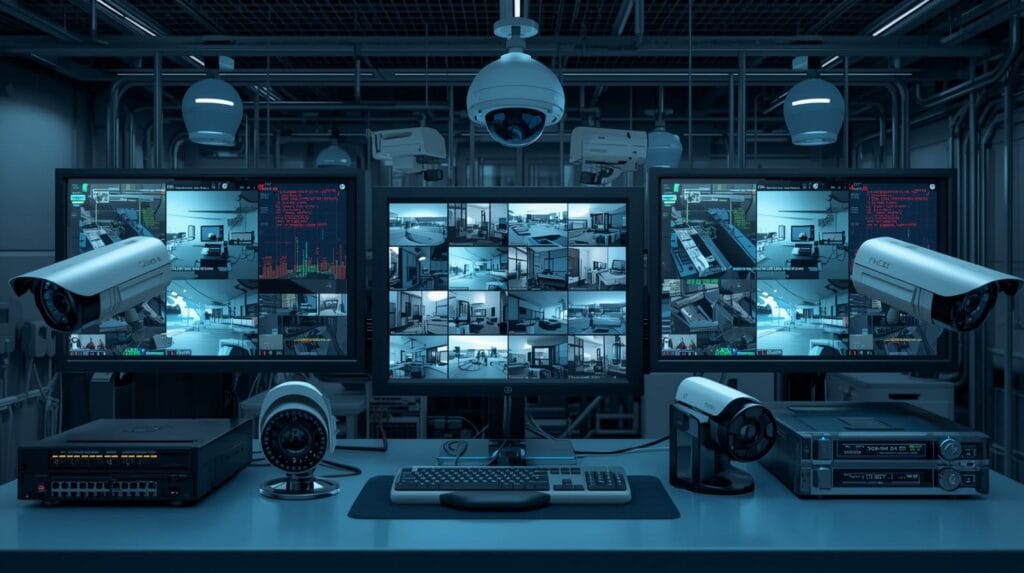
Walk into almost any business today and you will spot cameras somewhere. Above the entrance, in the corner of the parking lot, maybe behind the front desk. They have become so common that most people stop noticing them. But investing in the right video surveillance service is not just about putting cameras on walls. A properly designed commercial video surveillance system does something most businesses are not fully taking advantage of yet. And the gap between having video surveillance services in place and actually using them well is where most of the real value gets lost.
But here is the thing. Having cameras and actually using them are two very different things.
A lot of businesses install a commercial video surveillance system, make sure the feeds are live, and then move on. Nobody checks the footage unless something gets stolen or an incident gets reported. The cameras are there, but they are not really doing much. That is not protection. That is the appearance of protection.
This piece breaks down what these systems actually include, what you should expect to pay, and where the genuine value comes from.
What a Commercial Video Surveillance System Is Really Made Of
Most people picture a video surveillance system as just cameras on walls. But the camera is really just the beginning. What turns a few cameras into an actual system is everything behind them.
Think about it practically. The camera captures video. That video has to be stored somewhere in a way that makes it easy to find later. Someone needs to be able to manage the whole setup without it becoming a full-time job. And ideally, the system should be able to flag things worth paying attention to rather than just passively recording hours of footage nobody watches.
IP Cameras: The Foundation of Any Video Surveillance Service
IP cameras are the standard today for commercial setups. They send video over a network instead of through old-style analog cables, which means sharper image quality, the ability to access feeds remotely, and easier integration with other software. If someone is still trying to sell you an analog system for a new installation, that is worth questioning.
Storage and Software: What Makes Video Surveillance Services Actually Work
Storage is the next piece. Local recorders work and are reliable, but more businesses are adding cloud storage alongside them. The advantage is straightforward: footage in the cloud can be pulled up from anywhere, and it does not disappear if someone damages or steals the on-site hardware during the very incident you need footage of.
Then there is the software. A good video surveillance service platform is what makes a system actually usable. You should be able to pull up any camera quickly, search back through footage by time or event, get alerts when something triggers, and manage everything from one place. If the software feels like a chore to use, people stop using it. Good systems get used. Bad ones get ignored.
A lot of newer commercial video surveillance systems now come with built-in analytics. Not just basic motion detection, but things like license plate recognition, people counting, and alerts for specific behaviors or object types. These are not luxury features anymore. They are becoming standard, and they make a real difference in how useful a system is day to day.
What Actually Matters When Comparing Video Surveillance Systems
It is tempting to focus on specs when you are shopping for video surveillance services. Resolution, frame rates, storage capacity. These numbers matter, but they are not where most buyers make mistakes.
Camera Placement Beats Camera Count Every Time
Camera placement matters more than camera count. This sounds simple but it gets overlooked constantly. A property covered by eight cameras placed well will have fewer blind spots than one with fifteen cameras that were installed without a real plan. If a vendor is quoting you without walking the property first, they are not actually designing a system for your needs. They are just selling you hardware.
Low-Light Performance and Remote Access
Low-light performance is where you see the real difference between quality equipment and cheap equipment. During the day, almost any modern camera produces decent footage. At night, in a dim parking garage, or in a poorly lit stairwell, budget cameras fall apart fast. The footage gets grainy, dark, and often completely unusable. Cameras with solid infrared illumination and proper low-light sensors hold up in those conditions. That matters because a lot of incidents happen in exactly those conditions.
Remote access has become a basic expectation. Being able to check any camera from your phone or laptop, wherever you are, should not be a premium feature anymore. It is standard. If a video surveillance system makes remote access clunky or unreliable, that is a real problem because people will just stop trying.
Scalability is something worth thinking about upfront even if you only have one location today. Adding a second location to a system that was not built to grow usually means either starting over or spending money on workarounds. Cloud-based platforms handle expansion much more cleanly.
What Commercial Video Surveillance Services Actually Cost
The range is genuinely wide here, and the differences are real, not arbitrary.
Small to Mid-Sized Businesses
For a single location business, a retail shop, a small office, a restaurant, a well-specified commercial video surveillance system with six to eight cameras, proper storage, and reliable remote access typically lands between $3,000 and $8,000 for equipment and installation combined. That is not the cheapest option available. It is the range where you start getting equipment that actually holds up and installation done properly.
Larger Properties and Ongoing Costs
Larger properties cost more. A warehouse, a multi-floor commercial building, or anything with substantial outdoor space can run from $15,000 to $50,000 or higher. That depends on how many cameras are needed, how complex the network setup is, and what software platform gets selected.
Then there are the ongoing costs. Cloud storage subscriptions, software licensing, and professional video surveillance services all add to the monthly number. Remote monitoring, where a trained team watches your feeds and responds to activity in real time, typically runs between $200 and $800 a month depending on the size of the setup and the level of coverage.
One thing worth saying directly. A cheaper installation almost always ends up costing more. Cameras in the wrong spots, storage that was not sized properly, a network that was left insecure. These problems do not fix themselves, and fixing them later is more expensive than getting it right the first time.
Where the Real Benefits of a Video Surveillance System Show Up
Deterrence is the obvious one. A properly installed video surveillance system makes a property a less appealing target. People who might otherwise try something tend to move on. That effect is real and it works.
Documentation and Legal Protection
Documentation changes everything when something goes wrong. Clear footage with an accurate timestamp is an objective record that resolves disputes in a way that nothing else really can. Insurance claims, legal situations, internal investigations. All of them go differently when the evidence is right there. Businesses that have been through a serious incident without good footage almost always upgrade their video surveillance service afterward. That is not a coincidence.
Operational Visibility and Liability Coverage
Operational visibility is something many business owners do not expect to care about and then end up relying on. When you have cameras covering your loading dock, your production floor, or your service counter, you start seeing how work actually gets done, not how you assumed it was getting done. Managers find things through footage that would have stayed invisible otherwise. Slow processes, safety issues, training gaps. It is genuinely useful information.
Liability protection is harder to attach a number to but can be among the most financially significant benefits. When a slip and fall claim comes in or an injury leads to a legal dispute, footage that shows exactly what happened is a serious advantage. Without it, you are relying on people’s memories and accounts, which are rarely as clear or consistent as actual video.
The Types of Businesses That Need Video Surveillance Services Most
Commercial video surveillance systems deliver the clearest returns in places where keeping consistent eyes on things is genuinely difficult.
Retail, Logistics and Commercial Properties
Retail is the obvious one. High foot traffic, limited staff, and the constant challenge of both customer-facing risk and internal theft make solid camera coverage genuinely important. Logistics and distribution operations deal with large outdoor areas, round-the-clock activity, and the need to verify what is happening with vehicles and cargo at any given time. Office buildings and commercial properties use video surveillance services to manage access points, parking structures, and shared spaces without adding staff to do it manually.
The common factor is not the industry. It is the challenge of maintaining consistent visibility across spaces that cannot realistically be watched in person all the time.
The Only Question That Actually Matters
Most businesses already have a video surveillance system in place. That part is done.
The real question is what that system is actually being used for. If the answer is that it gets checked when something bad happens and otherwise sits ignored, then it is not really doing security work. It is just storing footage that nobody looks at.
The same commercial video surveillance system, actively managed and treated as part of how the property runs day to day, does something different. Issues get caught sooner. Decisions get made with better information. When something serious happens, the evidence is there.
Before spending money on new equipment or upgrades, it is worth being honest about how your current video surveillance service is actually being used. That question usually points directly to where the real problem is.
FAQ
Frequently asked questions
A virtual assistant is a remote professional who handles tasks that don’t necessarily need to be done by you. They can manage emails, schedule meetings, handle customer inquiries, manage social media, bookkeeping, project coordination, and other administrative work to free up your time for high-impact activities.
- Crystal Clear High Definition Video Surveillance
- Seamless Real Time Remote Monitoring
- Expansive Wide Angle Security Coverage
A commercial video surveillance system is a network of security cameras, storage devices, and monitoring software used by businesses to record and manage video footage. These systems help monitor properties, prevent theft, improve safety, and provide evidence during incidents.
The cost of a commercial video surveillance system typically ranges from $3,000 to $8,000 for small businesses and $15,000 to $50,000+ for larger facilities, depending on the number of cameras, installation complexity, storage capacity, and monitoring services.
Key features include high-resolution IP cameras, reliable low-light performance, cloud or hybrid storage, remote access via mobile devices, scalable software platforms, and built-in video analytics such as motion detection or license plate recognition.
Cloud-based surveillance systems offer advantages like remote access, automatic backups, and protection against footage loss if on-site hardware is damaged or stolen, while local storage provides faster access and no monthly cloud fees. Many businesses use hybrid systems combining both.
Yes. Visible security cameras act as a strong deterrent to theft and vandalism. When combined with active monitoring and analytics, commercial surveillance systems can help businesses detect suspicious activity early and respond before incidents escalate.