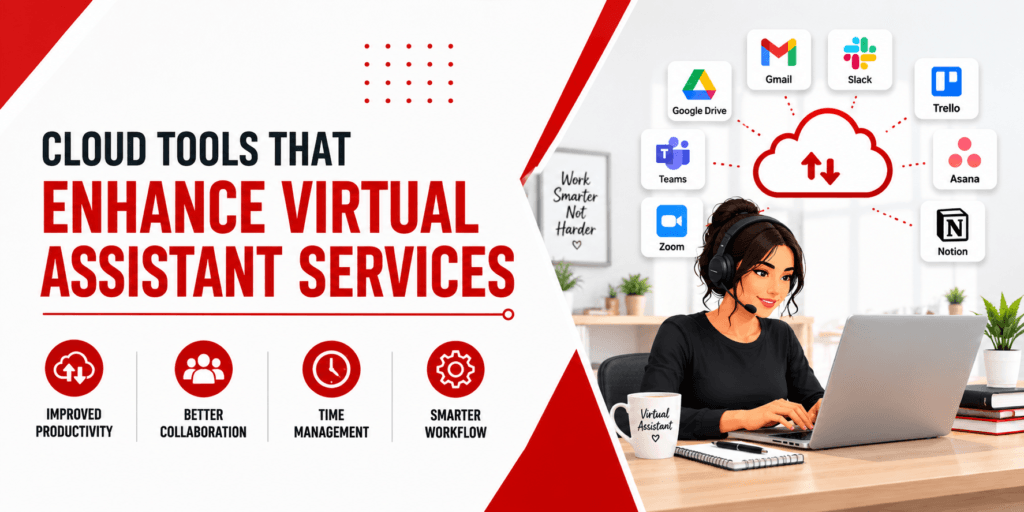
In the world of digital technologies, the virtual assistant services are becoming the favoured source of help by businesses to organise work, cut down on overhead costs, and enhance productivity. Such services, combined with the appropriate cloud tools, are exponentially more efficient and capable. Cloud-powered virtual assistants (VAs) enable them to coordinate work and collaborate with others, as well as provide the results without any issues, no matter where or when.
With the integration of virtual assistant services and cloud-based solutions, companies are able to scale, automate, and keep an orderly environment in an environment that is fast-paced. In the following paragraphs, the most notable cloud tools that can contribute greatly to the virtual assistant services and assist the businesses in reaching the utmost efficiency will be discussed.
Project Management Tools
It is hard to handle numerous tasks, deadlines, and clients without the right equipment. Project management solutions on the web, such as Trello, Asana, and Monday.com, are used to manage projects, allocate tasks, and impose deadlines and real-world progress through virtual assistant services.
These tools are advantageous to virtual assistant services through transparency and accountability. Managers are able to see the status of performance of work tasks immediately, and VAs are able to prioritise and work effectively. The alignment with calendars and schedule reminders will make sure that nothing drops into the cracks, which enhances the overall efficiency.
Collaboration Platforms And Communication Platforms
Communication is the key to successful virtual assistant services. One of the components of the virtual assistant is cloud-based applications like Slack, Microsoft Teams, and Zoom, which allow communicating with clients and other team members easily.
These channels facilitate text messaging, video conferencing and file exchange. These tools can be used to offer virtual assistant services that are able to update in time, clarify instructions, and answer queries promptly. Effectiveness in communication reduces mistakes, speeds up work and enhances working relationships.
Cloud File And Storage
Security and efficiency in file management are vital to the virtual assistant services. Cloud storage services as Google Drive, Dropbox, and OneDrive help VAs to store, retrieve, and share documents anywhere.
These tools allow working on common files, versioning files, and up-to-date information. Client documents can be accessed fast, folders can be arranged, and client confidential information can be backed up and kept safe with the help of virtual assistant services. Cloud storage makes accessibility better and minimises cases of lost or misplaced files.
Time Tracking And Productivity Tools
In the case of the virtual assistant services, accountability and efficiency require time to be monitored on tasks. Applications such as Toggl, Clockify and Hubstaff offer precise time monitoring, reporting, and analytics.
These cloud-based virtual assistant services prioritise tasks, discover bottlenecks, and enhance workflows. Clients enjoy extensive reports of activity, which bring transparency and performance evaluation. Virtual assistant services will ensure productivity and multi-tasking of multiple assignments using themselves through time tracking tools.
Scheduling And Calendar Management
The management of schedules and appointments is one of the main functions of the virtual assistant services. This is made easy through cloud-based scheduling software such as Calendly, Google Calendar and Microsoft Outlook.
Meetings may be organised through the virtual assistants and automated reminders may be sent with ease, as well as time zone differences are easily handled. These devices eliminate the cases of bookings made twice, appointments missed, and ensure all interactions with clients are made to run smoothly. Workflow efficiency is also increased through integration with the project management and communication platforms.
Customer Relationship Management (Crm) Systems
Client relationship is important to companies that are utilizing the virtual assistant services
VAs can use cloud-based CRM programs such as HubSpot, Salesforce, and Zoho CRM to handle client data, monitor interactions, and make pursuits on leads.
The virtual assistant services based on CRM platforms can be used to segment the clients, automate communication and report in detail. This has guaranteed the maintenance of steady client interaction, minimisation of manual tracking errors and enhancement of customer satisfaction. A well-organised CRM system enables VAs to deliver personalised and proactive support.
E-Signature And Document Automation Software
Clients usually respond to contracts, proposals, and other official papers using virtual assistant services. e-Signatures and automated processes For managing documents, cloud-based automation applications such as DocuSign, HelloSign, and PandaDoc can be used to simplify the process of document management.
These applications enable virtual assistants to be ready, dispatch and monitor documents safely and effectively. Less time is spent, and less paperwork is also minimised. The automation of documents guarantees the expedited turnaround and high quality of the provided professional service.
Financial Tools And Accounting
Processing invoices, costs, and financial documentation is a sensitive aspect of virtual assistant services to most companies. VAs can also keep finances remotely through cloud accounting services such as QuickBooks Online, Xero, and FreshBooks.
Using these tools, virtual assistant services are capable of producing invoices, monitoring payments, and balancing accounts with ease. Automated reporting saves on mistakes and gives accurate financial tracking, and businesses are free to operate what is important in the business.
Social Media Management Tools
Virtual assistant services tend to run social media accounts of businesses that need some marketing assistance. Hootsuite, Buffer, and Sprout Social are cloud-based tools that allow scheduling and monitoring, as well as tracking of analytics.
Through such platforms, VAs get to post content at the best time possible, address audience responses, and measure campaign performance. The combination of these tools can enable virtual assistant services to make businesses maintain a high-level of presence on the internet without necessarily burdening the internal teams.
Tools Of Security And Access Control
The security of data is a very important issue in virtual assistant services. VAs can use cloud security services, including VPNs, LastPass, 1Password, and others, to store sensitive data with minimal risks.
The advantages of the virtual assistant services are that it has security of passwords, secured communication and access to the most vital systems is regulated. Cloud security will guarantee the protection of client and business data against breach or unauthorised access.
Conclusion
The integration of cloud applications and virtual assistant services changes the way businesses are conducted. These cloud-based solutions improve efficiency, accuracy, collaboration on project management, communication and scheduling, financial management, etc.
Cloud-based virtual assistant services are higher, more reliable and better organised to provide businesses with more opportunities to scale operations and prioritise business growth. Cloud tools are becoming a necessity in a remote-first world, and not an option anymore, as they are crucial in ensuring that the potential of virtual assistant services is maximised.
Using the following cloud solutions, companies will be able to unleash the full potential of the virtual assistant services and minimise errors, enhance productivity, and secure a smooth team and time-zone operation.
FAQ
Frequently asked questions
A virtual assistant is a remote professional who handles tasks that don’t necessarily need to be done by you. They can manage emails, schedule meetings, handle customer inquiries, manage social media, bookkeeping, project coordination, and other administrative work to free up your time for high-impact activities.
- Crystal Clear High Definition Video Surveillance
- Seamless Real Time Remote Monitoring
- Expansive Wide Angle Security Coverage
Cloud-powered tools allow virtual assistants (VAs) to coordinate work, collaborate in real-time, and manage tasks seamlessly from any location. They improve efficiency by providing secure file storage, automated scheduling, precise time tracking, and streamlined communication, helping businesses scale and reduce overhead costs.
Popular web-based project management tools like Trello, Asana, and Monday.com are ideal for tracking tasks, setting deadlines, and monitoring real-time project progress. They ensure transparency and accountability, allowing managers to oversee performance while VAs prioritize their daily duties.
Cloud storage platforms such as Google Drive, Dropbox, and OneDrive enable VAs to securely store, retrieve, and share documents from anywhere. They support real-time file collaboration and versioning, minimize the risk of lost files, and securely back up confidential client information.
Cloud-based CRM systems like HubSpot, Salesforce, and Zoho CRM help VAs manage client data, track interactions, and follow up on leads. These tools allow VAs to automate communication, maintain steady client engagement, minimize manual tracking errors, and deliver personalized support.
VAs can utilize cloud accounting services like QuickBooks Online, Xero, and FreshBooks to handle financial documentation remotely. These platforms make it easy to generate invoices, monitor payments, reconcile accounts, and produce accurate financial reports while reducing manual errors.