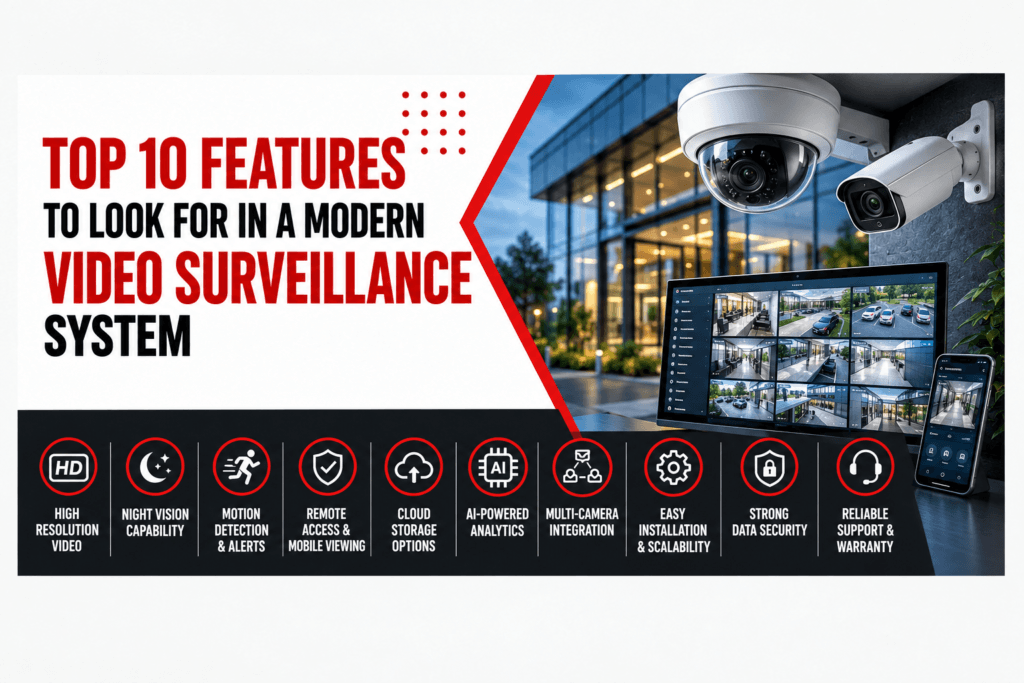
A break-in doesn’t take long. Ten seconds, maybe fifteen, and it’s over before anyone’s even noticed. Grainy footage or a camera pointing the wrong way, and you’re left with an insurance claim and not much else. That’s usually when businesses finally start taking a video surveillance system seriously, instead of just having one because everyone else does.
Not every setup performs the same, and honestly, a lot of commercial video surveillance still runs on old logic: record everything, hope you never need to look back. We’ve put together the ten features actually worth caring about here, what makes a video surveillance system genuinely useful rather than decorative, and why the video surveillance services around your cameras matter just as much as the kit itself. Warehouse, office, shop floor, whatever you’re running, this should make the choice a bit easier.
Why the Right Video Surveillance System Matters
Most people assume their site is properly covered until the day something happens and they find out it wasn’t. A working video surveillance system does more than sit there recording. It catches problems early, gives your guards something to work with, and hands you solid evidence when you actually need it.
Old CCTV setups weren’t really built for anything beyond recording and storing. Footage sat on a hard drive gathering dust until someone finally needed it, usually after whatever happened had already happened. Today’s video surveillance systems don’t work like that. They watch, they think a bit, and they alert straight away, so threats get caught before they become losses rather than get explained afterwards over a cup of tea.
Right, here’s what’s actually worth looking for.
1. High-Resolution Cameras
For video, surveillance system clear footage is the whole point of any of this, so don’t cut corners here. 1080p minimum, 4K where it counts: entrances, tills, car parks. The gap between a face you can identify and a smudge you can’t usually comes down to resolution and nothing else.
2. Strong Low-Light and Night Vision Performance
Most incidents happen after dark, which is a bit of an inconvenient fact for anyone relying on daytime footage alone. A camera that’s brilliant at 2 pm and useless at 2 am hasn’t really done its job. Infrared or colour night vision keeps things usable round the clock, and for commercial video surveillance covering car parks or loading bays, that’s not optional.
3. AI-Powered Video Analytics
Commercial video surveillance systems can now tell a person apart from a van, or a van apart from the neighbour’s cat strolling through at 3 am. That distinction alone cuts false alarms right down, so alerts only go off when something genuinely needs a look. Loitering detection, line crossing, that sort of thing, all add a useful extra layer without much fuss.
4. Real-Time Alerts and Live Monitoring
Nobody wants to hear about an incident the next morning over coffee. A proper video surveillance system flags things the moment they look off, routed to a monitoring centre or straight to guards on site, so there’s still a window to actually do something while it’s happening.
5. Remote Access and Mobile Viewing
Managers don’t sit at one desk all day, so why should the cameras act like they do? Checking a live feed or pulling old footage from a phone, wherever you happen to be standing, has become one of the more requested bits of any video surveillance services package. It’s the sort of thing nobody asks for until they’ve had it, and then they won’t go back.
6. Wide Field of View and Smart Camera Placement
Blind spots. Probably the most common mistake, and the most avoidable one too. Wide-angle or panoramic cameras help with this, but placement still beats the spec sheet every time. A proper site survey- walking the entry points, the stock room, that one awkward corner by the fire exit- should always happen before anything gets installed, not as an afterthought.
7. Weatherproof and Tamper-Resistant Build
Outdoor cameras cop a lot: rain, heat, and occasionally someone having a go at knocking one off the wall. IP66 or better is the benchmark, along with housing that can take a knock, particularly anywhere with public access or a bit of a history.
8. Reliable Storage and Sensible Retention Periods
Cloud, local, or a mix of both- it depends on how your business actually operates day to day. Retention matters just as much as where the footage lives, though. USA data protection rules mean you shouldn’t be hoarding footage longer than you actually need it, so a video surveillance service that lets you set retention properly, not just “keep everything forever,” is worth having.
9. Easy Integration with Guarding and Alarm Services
A camera on its own just records. It doesn’t stop anything, doesn’t do anything, just watches. Wire that video surveillance system into manned guarding, alarm response or a monitoring centre and suddenly footage turns into action rather than evidence you look at afterwards. This, more than anything else on this list, is what separates a system that actually deters crime from one that just documents it happening.
10. Scalability and Ongoing Support
Whatever your setup looks like today, it won’t look the same in three years. Go with something that lets you bolt on extra cameras or sites without tearing the whole thing out, and ask exactly what support comes with it. Good video surveillance services cover setup, updates and the inevitable troubleshooting long after the installer’s van has left, not just day one.
Conclusion
Picking a video surveillance system comes down to more than sharp pictures, whatever the brochures might suggest. What actually protects a business is cameras, analytics, storage and a real plan for what happens next, all working together rather than sitting in isolation.
If a commercial video surveillance upgrade is on your radar, prioritise whatever supports fast action over whatever just looks clean on playback. Pairing cameras with proper video surveillance services, guarding and monitoring included, is usually what closes the gap between noticing a problem and actually stopping it.
Before you sign anything, ask your supplier straight out how their video surveillance systems handle alerts, storage and growth down the line. A short conversation now saves a lot of grief later, and a good setup should just quietly get on with its job in the background.
FAQ
Frequently asked questions
A virtual assistant is a remote professional who handles tasks that don’t necessarily need to be done by you. They can manage emails, schedule meetings, handle customer inquiries, manage social media, bookkeeping, project coordination, and other administrative work to free up your time for high-impact activities.
- Crystal Clear High Definition Video Surveillance
- Seamless Real Time Remote Monitoring
- Expansive Wide Angle Security Coverage
No single feature carries it alone, but real-time alerts combined with AI analytics probably make the biggest practical difference. You catch problems as they happen, not while scrubbing through footage the next morning, wondering what you missed.
Depends on the industry and how much risk you're carrying, but most USA businesses land around 30 days under data protection guidance. Higher-risk sites sometimes push that longer, so it's worth just asking your video surveillance services provider what they'd recommend for your setup specifically.
Not strictly, no. But it makes a genuine difference to how fast anyone actually responds. A monitored video surveillance system means someone's watching or reviewing alerts even when your own staff have gone home.
Yes, most video surveillance systems play nicely with alarm panels and access control. Together they give a much fuller picture of what's actually going on, and let you respond faster with better information than a camera alone could give you.
Cloud makes remote access easier and protects footage if the hardware gets damaged or nicked. Local storage tends to be cheaper to start with. Plenty of businesses run both together now, mostly just for the peace of mind.