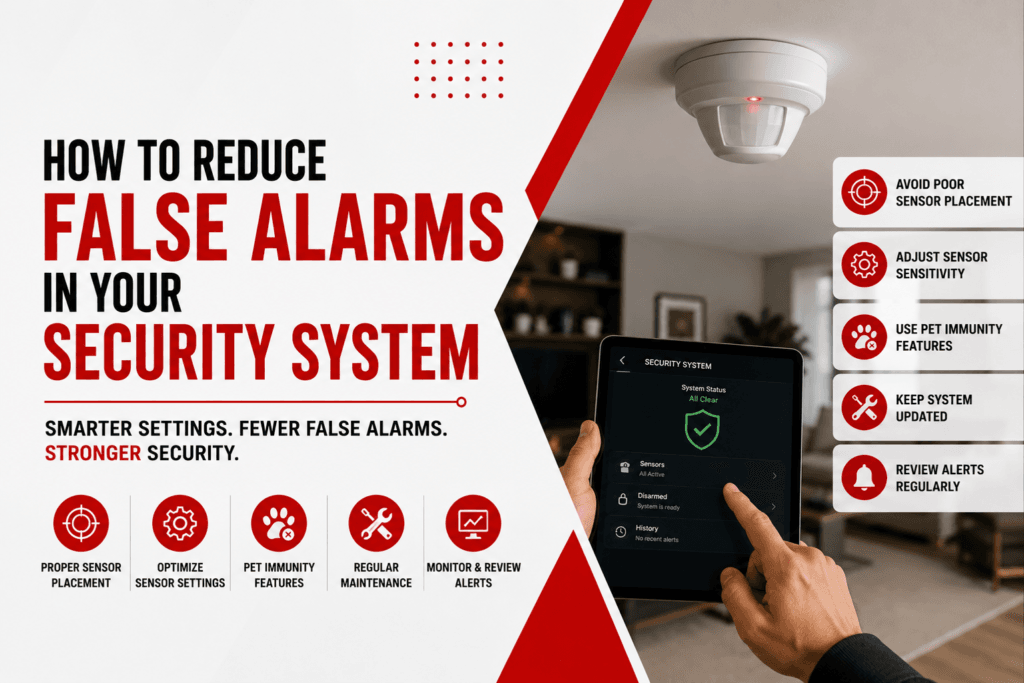
False alarms are growing concern for industries that hinge on on modern security structure. Factors such as ecological environments, user faults, and unsuitably preserved equipment can activate unnecessary alerts that disturb actions and reduce the efficiency of an alarm monitoring system. Frequent false alarms may also lead to pointless emergency dispatches and improved operational costs. To report these challenges, governments are adopting progressive alarm monitoring security resolutions that combine real-time monitoring, intelligent certification, and faster response competences. In addition, fire alarm monitoring services and fire alarm structure monitoring support exact emergency finding while serving businesses advance reliability, efficiency, and overall security act.
What Is A False Alarm In A Security System?
A false alarm in a safety system occurs when an alert is prompted without the occurrence of an actual threat, emergency, or unlawful activity. These alarms can consequence from human error, environmental circumstances, equipment malfunctions, or unfitting system configuration. In many cases, false alerts lessen the efficiency of an alarm monitoring system by making unnecessary disruptions and collective response costs. Modern alarm monitoring security solutions are calculated to minimalize these incidents via accurate confirmation and real-time intensive care. Additionally, advanced fire alarm monitoring services and fire alarm system monitoring benefit differentiate genuine crises from non-threatening events, refining overall system dependability and response exactness.
The Hidden Cost Of False Alarms
False alarms can produce significant operative and economic challenges for industries relying on security substructure. Frequent needless alerts may lead to emergency dispatch fees, workflow disturbances, reduced productivity, and reduced confidence in an alarm monitoring system. Over time, frequent false alarms can also back to alarm fatigue, causing safety teams to respond more slowly to honest threats. Modern alarm monitoring security resolutions aid reduce these risks over accurate confirmation and real-time monitoring. In addition, dependable fire alarm monitoring assistance and fire alarm system monitoring progress emergency reply accuracy while minimalizing preventable operational costs and needless interruptions.
Common Causes Of False Security Alarms
- Human Error
Incorrect system usage, improper arming procedures, and employee mistakes frequently trigger unnecessary alerts within an alarm monitoring system.
- Environmental Factors
Weather conditions, insects, moving objects, and lighting changes can interfere with alarm monitoring security systems and create false alerts.
- Faulty Equipment
Damaged sensors, outdated devices, and poor maintenance reduce the reliability of fire alarm system monitoring and security operations.
- Poor Camera Placement
Improper camera positioning creates blind spots, inaccurate motion detection, and unnecessary alerts within advanced alarm monitoring security environments.
- Network Interruptions
Weak connectivity and uneven networks can upset fire alarm monitoring services and activate wrong system notices.
Traditional Alarm Systems Vs Smart Alarm Monitoring Systems
Traditional Alarm Systems | Smart Alarm Monitoring Systems |
Generates alerts after triggers occur | Verifies threats in real time |
Higher chances of false alarms | Improved alert accuracy and verification |
Relies heavily on basic motion detection | Uses AI and intelligent analytics |
Limited situational awareness | Provides continuous real-time monitoring |
Reactive response process | Proactive threat prevention approach |
Requires manual investigation | Enables faster automated verification |
Frequent unnecessary emergency dispatches | Reduces false emergency responses |
Minimal integration capabilities | Integrates with modern security infrastructure |
Limited remote accessibility | Supports remote monitoring and mobile access |
Functions mainly as an alert system | Operates as a complete alarm monitoring security solution |
Why Traditional Alarm Systems Create More False Alerts
Traditional security systems often depend on on basic gesture detection and imperfect verification procedures, making them more prospective to produce false alerts. Environmental variations, equipment sensitivity, and user errors can easily cause pointless alarms within a predictable alarm monitoring system. Unlike modern alarm monitoring security solutions, outdated systems lack cutting-edge analytics and real-time confirmation abilities. Additionally, outdated setups without specialized fire alarm monitoring services or smart fire alarm system monitoring may fight to accurately differentiate genuine tragedies from non-threatening doings.
How Live Video Monitoring Reduces False Alarms
Live video monitoring decreases false alarms by compounding real-time observation with professional human authentication. Instead of trusting solely on automated triggers, trained monitoring workers review live tape to determine whether an alert signifies a genuine threat or a non-threatening occasion. This process recovers the exactness of an alarm monitoring system and minimizes redundant emergency notices. Modern alarm monitoring security solutions also integrate intelligent analytics and remote verification to improve response efficiency. Additionally, advanced fire alarm monitoring services and fire alarm system monitoring help organizations detect actual emergencies faster while reducing avoidable false alerts.
Using Ai And Smart Video Analytics
AI and smart video analytics show a critical role in tumbling false alarms by enhancing detection correctness and filtering inappropriate activity. These technologies examine movement forms, object types, and interactive data to distinguish between real fears and harmless events. When combined with an alarm monitoring system, AI aids abate unnecessary alerts and enhances overall trustworthiness. Modern alarm monitoring security solutions use intelligent algorithms alongside real-time monitoring to improve decision-making. Additionally, advanced fire alarm monitoring services and fire alarm system monitoring benefit from AI-driven verification, ensuring faster identification of genuine emergencies and reducing operational disruptions caused by false alarms.
Best Practices For Reducing False Alarms
Falling false alarms necessitates a blend of suitable system setup, regular preservation, and user consciousness. Businesses should ensure their alarm monitoring system is correctly organized and frequently tested to uphold truth. Training staffs on proper practice also helps diminish human errors that can activate needless warnings. Upgrading to innovative alarm monitoring security solutions with AI confirmation enhance detection consistency and decreases false activates. Additionally, sustaining and trying fire alarm monitoring services and fire alarm system monitoring on a repetitive basis ensures early discovery of faults, better system performance, and suggestively fewer false alarm events.
Industry-Specific False Alarm Challenges
- Warehouses and Logistics Facilities frequently practice false alarms due to high motion activity, equipment movement, and ecological dust upsetting the alarm monitoring system exactness.
- Retail Stores face frequent triggers from customer traffic, door sensors, and display movements, requiring improved alarm monitoring security to reduce unnecessary alerts.
- Construction Sites generate false alarms from heavy equipment, weather conditions, and open-site exposure, challenging reliable fire alarm system monitoring performance.
- Office Buildings may encounter false alerts caused by employee access errors or improperly secured entry points within the alarm monitoring system.
- Residential Communities frequently deal with untruthful alarms due to domestic animal, maintenance doings, and user errors, growing demand for progressive fire alarm monitoring services.
Legal, Compliance, And Alarm Fines
Incorrect alarms can lead to serious legal and economic significances for trades if they occur frequently without proper system organization. Many local establishments impose drawbacks or fines for unnecessary emergency notices caused by untrustworthy alarm monitoring system triggers. Administrations must also fulfil with security regulations that necessitate properly upheld and tested alarm monitoring security systems to guarantee operational accuracy. In addition, non-compliance with standards for fire alarm monitoring services and fire alarm system monitoring can effect in penalties, legal obligation, and increased analysis from regulatory bodies, making proper system organization essential for avoiding costly significances.
Choosing The Right Monitoring Provider
Picking the exact benefactor is vital for tumbling false alarms and refining security efficacy. A reliable alarm monitoring system provider offers advanced alarm monitoring security, accurate verification, and fast response services. Ensure they also provide dependable fire alarm monitoring services and fire alarm system monitoring for complete protection.
Future Tendencies In False Alarm Stoppage
Future developments in security expertise will meaningfully recover the correctness of detection and lessen false alarms across organizations. AI-driven analytics, cloud-based platforms, and IoT-enabled strategies will improve the presentation of every alarm monitoring system. Modern alarm monitoring security results will gradually rely on analytical intelligence to classify risks beforehand alerts are activated. Additionally, next-generation fire alarm monitoring services and fire alarm system monitoring will fit in automation and real-time data analysis, safeguarding faster comeback and higher dependability in emergency circumstances.
Conclusion
Wrong alarms meaningfully fail the overall efficacy of any safety circumstance by causing needless commotions, dipping response efficiency, and lowering faith in an alarm monitoring system. Hence, to overcome these trials, trades must adopt keener technologies, improved procedures, and nonstop oversight through progressive alarm monitoring security keys. Prevention is only conceivable when systems are correctly arranged, maintained, and supported by smart tools. Real-time confirmation plays a serious role in improving accurateness and guaranteeing that only genuine threats trigger act. Additionally, modern fire alarm monitoring services and fire alarm system monitoring increase reliability, reduce operative risks, and brace overall emergency response act.
FAQ
Frequently asked questions
A virtual assistant is a remote professional who handles tasks that don’t necessarily need to be done by you. They can manage emails, schedule meetings, handle customer inquiries, manage social media, bookkeeping, project coordination, and other administrative work to free up your time for high-impact activities.
- Crystal Clear High Definition Video Surveillance
- Seamless Real Time Remote Monitoring
- Expansive Wide Angle Security Coverage
Wrong alarms are usually produced by human error, ecofriendly circumstances, faulty gear, or deprived system shape within security systems.
Trades can decrease false alarms by correctly upholding systems, working out users, using AI confirmation, and certifying correct alarm setup and monitoring courses.
Yes, AI can cut false warnings by analyzing patterns, cleaning irrelevant movement, and enlightening detection correctness in real time.
Yes, live video monitoring helps prevent false alarms by allowing human verification before escalating alerts or contacting emergency responders.
Motion devices trigger false alarms due to lighting changes, moving objects, pets, insects, or unfitting sensitivity settings in the system.