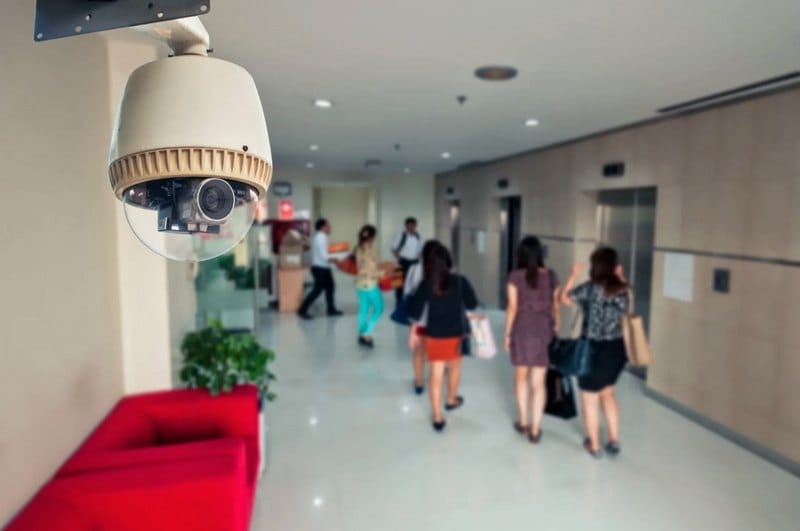
Guests expect hotels to feel safe from the moment they check in, yet many properties still have blind spots that only become apparent after something goes wrong. This is precisely why a properly intentional hotel security camera system has become vital rather than a nice-to-have for modern hospitality trades.
If you own a hotel or you’re investigating hotel surveillance cameras for a new property, you’re likely balancing guest privacy, staff safety, and asset safety all at once. Getting the placement and attention right isn’t always straightforward.
It’s worth noting early on that a security camera for hotel room corridors and entrances is standard practice, while actual guest rooms remain strictly off-limits under USA privacy law.
In this guide, we’ll cover exactly how a strong security system in hotel industry settings works, where cameras should go, and what to check before choosing a provider for your property.
Understanding Hotel Surveillance Systems
A hotel security camera system covers far more ground than a typical office or shop setup. It needs to monitor entrances, corridors, lifts, car parks, and loading bays, often across multiple floors and sometimes several buildings on one site.
Most modern hotel security camera system installations use IP cameras rather than older analogue CCTV. This matters because IP cameras allow higher resolution footage, remote viewing from a manager’s phone, and easier expansion when a hotel adds a new wing or car park.
Footage is usually stored either through a local network video recorder within the building, or through cloud backup. Cloud storage has become the safer choice for hotels specifically, since it protects footage even if fire, flood, or theft damages the on-site equipment.
Why Hotels Need Strong Surveillance Coverage
Hotels are unusual from a security standpoint. Strangers move freely through public areas all day, cash and valuables pass through reception constantly, and staff often work alone during night shifts. This mix is exactly why hotel surveillance cameras matter more here than in most other commercial settings.
A well-placed system helps in several practical ways:
- Discourages theft and antisocial behaviour in car parks and corridors, simply through visibility.
- Gives night staff a clear view of entrances and lobbies when working alone.
- Provides solid evidence for police, insurers, and internal investigations after an incident.
- Helps resolve guest disputes fairly, particularly disagreements over damage or missing items.
- Supports duty managers who need to check multiple areas quickly during an emergency.
Where Hotel Surveillance Cameras Belong, and Where They Cannot Go
This is the part many guides skip, and it’s the part that matters most.
Public and Guest-Facing Areas
Cameras are appropriate and expected in main entrances, reception desks, lift lobbies, corridors, car parks, loading areas, bars, restaurants, and stairwells.
Staff-Only Areas
Cash handling points, storage rooms, and back-of-house corridors benefit from coverage too, particularly around safes and stock rooms where internal theft risk tends to be highest.
Where Cameras Legally Cannot Go
A security camera for hotel room interiors is illegal under USA law. Guests have a reasonable expectation of privacy inside their room, and installing any recording device there breaches the Protection of Freedoms Act and USA GDPR, regardless of intent. The same rule applies to bathrooms, spa treatment rooms, and pool changing areas.
Staying Compliant With USA Privacy Law
A properly built security system in hotel industry setup differs from a generic commercial one in one key way. Hotels handle a constant stream of people who never signed an employment contract or agreed to workplace monitoring, so guest privacy sits under different rules than staff monitoring does.
Under USA GDPR and ICO guidance, hotels need to:
- Display clear signage wherever cameras operate, so guests know they’re being recorded.
- Justify each camera’s purpose, since blanket surveillance without a clear reason can breach data minimisation rules.
- Set a defined retention period for footage rather than storing it indefinitely.
- Restrict footage access to authorised staff only, with a log of who viewed what and when.
None of this is difficult to get right, but it’s frequently missed, and it’s usually the first thing an ICO complaint or insurance audit checks.
What to Look For in a Hotel Security Camera System
Not every system marketed at hotels is actually built for hotel-specific risks.
Camera Types for Different Areas
Security system in hotel industry suit corridors and lobbies since they’re discreet and harder to tamper with. Bullet cameras work well in car parks and perimeter areas where range matters more than subtlety. Wide-angle cameras cover large open lobbies efficiently, using fewer units to capture more ground.
Resolution and Low Light Performance
Hotel surveillance cameras below 1080p struggle to produce usable evidence. For entrances and car parks, strong low-light or infrared performance matters most, since most incidents worth reviewing happen after dark.
Storage and Retention Periods
Most hotel security camera system retain footage for 30 to 90 days. Cloud backup with local redundancy offers the strongest protection against both equipment failure and physical tampering.
Integration With Access Control
Linking cameras to key card or fob systems means footage can be matched to a specific access event, which speeds up investigations significantly when something goes missing near a guest corridor or staff area.
Common Mistakes Hotels Make With Surveillance
Covering the lobby well while ignoring car parks. Car parks consistently see the highest incident rates, yet they’re often the last area properly covered by hotel surveillance cameras.
Treating installation as a one-time job. Cameras need regular maintenance checks. A faulty unit left unnoticed for weeks creates a genuine blind spot.
Skipping staff training entirely. A strong hotel security camera system achieves little if night staff don’t know how to respond when something appears on a live feed.
Overlooking signage and consent. Recording guests without visible signage isn’t just a compliance risk. It undermines the trust the system is meant to build in the first place.
What Hotel Surveillance Systems Typically Cost
Hotel security camera system pricing depends on property size, number of entrances, and whether the hotel needs extras like number plate recognition for car parks or 24/7 monitored alerts. A boutique property with one entrance costs considerably less to cover than a large hotel with multiple wings, several car parks, and function spaces.
Many providers offer phased installation, letting hotels start with entrances and reception, then expand coverage to car parks and staff areas as budget allows. This is often far more practical than funding a full property rollout in one go.
Questions to Ask Before Choosing a Provider
- Does the provider have direct experience with hospitality, not just general retail or office security?
- Can they advise on USA GDPR compliance, signage, and retention policy as part of the installation?
- What’s the response time if a camera fails during a busy period?
- Is footage encrypted both in storage and when accessed remotely by managers?
- Do they offer phased installation if the whole property can’t be covered at once?
A provider who raises privacy compliance without being asked is usually one who understands hospitality properly, rather than treating a hotel like any other commercial building.
Matching Coverage to Your Property’s Actual Risk Areas
The right security system in hotel industry setup depends entirely on the building’s layout, guest volume, and highest-risk areas. A city centre hotel with a minor car park has very dissimilar requirements compared with a resort property spread across several constructions.
Twitch by classifying where events are most likely to occur, car parks and after-hours entries typically top that list, then check current attention against USA privacy necessities before adding new hardware. An elegant hotel security camera system does more than record film tape. It vigorously defends guests and staff while presentation every person who checks in that their security has been thoughtfully considered.
A hotel security camera system plays an essential role in shielding guests, staff and property while serving hotels manage daily processes with greater sureness. Selecting the correct hotel surveillance cameras and understanding how a security system in hotel industry works lets hotel owners to progress safety without moving the guest experience. If you are assessing options, emphasise your property’s layout, legal necessities and long-term safety needs before making a choice. Taking time to choose the right solution today can decrease risks, expand monitoring and support better day-to-day administration for years to come.
FAQ
Frequently asked questions
A virtual assistant is a remote professional who handles tasks that don’t necessarily need to be done by you. They can manage emails, schedule meetings, handle customer inquiries, manage social media, bookkeeping, project coordination, and other administrative work to free up your time for high-impact activities.
- Crystal Clear High Definition Video Surveillance
- Seamless Real Time Remote Monitoring
- Expansive Wide Angle Security Coverage
A hotel security camera system is a net of cameras and monitoring gear designed to enhance security across hotel sites. It aids in monitoring entries, reception areas, access strips, and other shared places.
Hotel surveillance cameras are usually connected at entries, exits, car parks, welcome desks, lifts and lobbies. They are typically placed in community areas rather than private guest areas.
A security camera for hotel room engaged by guests is usually not permitted because it breaks privacy laws. Cameras should only be installed in suitable public or controlled staff areas and always obey with local regulations.
A robust security system in hotel industry aids in preventing crime, supports incident investigations, defends employees and visitors, and gives guests greater security during their visit.
When choosing a hotel security camera system, study image quality, storage capacity, remote access, upkeep needs, scalability and whether the arrangement can integrate with your current hotel security organization.