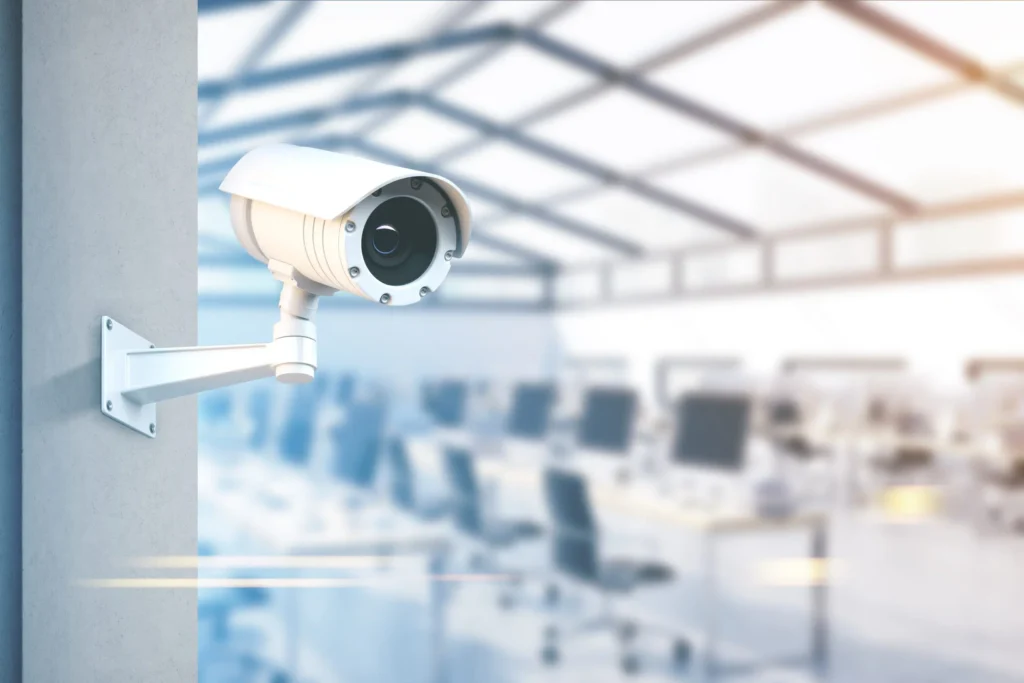
Selecting the incorrect camera setup can leave real breaches in your office security, and most industry owners only realize this after an incident has already occurred. That’s why selecting the right corporate security camera systems matters far more than most people realise before they start assessing options.
If you are looking for a corporate video surveillance systems for your office or construction, you are possibly weighing up cost, coverage, and dependability all at once. It’s a lot to get right, and getting it wrong can be expensive.
The good news is that up-to-date corporate video surveillance solutions have become far more flexible than older setups, offering better coverage without demanding a complicated connection process.
In this guide, we will walk you through closely what to look for, common mistakes businesses make, and in what way the right corporate surveillance services can defend your staff, assets, and sites without overcomplicating your safety budget.
Understanding Corporate Security Camera Systems
Corporate security camera systems are nets of cameras planned to monitor office structures, warehouses, car parks, and greeting areas. Unlike basic home CCTV, business arrangements need to cover larger areas, handle more operators, and often integrate with current access control systems.
Most modern corporate security camera systems use IP cameras linked over a network rather than older equivalent cables. This means footage can be watched remotely, stored more professionally, and scaled up as your business grows.
There are two main types of setup. On-premise arrangements store film locally on a server within your premises. Cloud-based corporate video surveillance systems store videotape off-site, which protects your data even if physical equipment is damaged or stolen. Many businesses now favour cloud-based corporate video surveillance systems simply because they’re easier to manage across multiple sites.
Why Businesses Invest in Corporate Video Surveillance Solutions
Office robbery, unauthorised access, and office disputes happen more often than most corporate owners imagine. Having reliable corporate video surveillance solutions in place aids in several hands-on ways:
- Deters theft and vandalism simply by being visible.
- Provides clear evidence during disputes or insurance claims.
- Helps HR teams investigate workplace incidents fairly.
- Monitors entry points and restricted areas around the clock.
- Supports remote managers who oversee multiple sites.
It’s worth remembering that cameras alone don’t solve every problem. Good corporate video surveillance solutions only work well when they’re properly placed, regularly maintained, and paired with clear internal policies on how footage gets used.
Key Features to Compare Before Buying
Not every system on the market offers the same value. When comparing corporate surveillance services, it helps to look beyond the price tag and focus on what actually matters for your building.
Camera Resolution and Coverage
Higher resolution cameras make it easier to identify faces and number plates, which matters if footage is ever used as evidence. Coverage also depends on your building layout. Open-plan offices often need fewer cameras than buildings with multiple corridors, stairwells, and separate entry points. Reliable corporate surveillance services should always start with a proper site survey before recommending camera placement.
Storage Capacity and Retention Periods
Most businesses need footage retained for at least 30 days, though this can vary depending on your industry and any compliance requirements you’re working under. Cloud storage tends to offer more flexibility here, since you’re not limited by the physical capacity of an on-site server.
Remote Access and Mobile Monitoring
Many managers now expect to check live feeds from their phone, especially if they oversee more than one location. This feature has become fairly standard across most corporate video surveillance systems, but the quality of the mobile app varies significantly between providers.
Integration With Access Control
Some corporate security camera systems can link directly with door entry systems, meaning you can match footage to specific access events. This is particularly useful for larger offices where multiple people use shared entry points throughout the day.
Common Mistakes Businesses Make When Choosing a System
Even experienced facilities managers get this wrong sometimes. The most frequent issues include:
Underestimating future needs. A system that suits a 20-person office might struggle once the company grows to 100 staff across multiple floors.
Ignoring cybersecurity. IP cameras connect to your network, which means poorly secured corporate video surveillance systems can become a weak point for hackers.
Skipping staff training. Even the best corporate security camera systems are less effective if staff don’t know how to respond to alerts or flag suspicious footage.
Choosing price over reliability. Cheaper corporate video surveillance solutions sometimes use lower quality sensors, which can produce grainy footage that’s difficult to use as evidence.
What Corporate Surveillance Services Typically Cost
Evaluating varies liable on the quantity of cameras, storage type, and whether you need add-ons like analytics or 24/7 monitoring. A small workplace with basic attention will cost significantly less than a multi-site professional needing centralised monitoring and advanced analytics.
Many providers of corporate surveillance services offer tiered packages, which makes it easier to start with essential coverage and add features like facial recognition or number plate recognition later, as your budget allows.
Questions to Ask Before Choosing a Provider
Before validating any agreement, it’s essential to ask a few direct queries:
- Does the provider know industries similar in size to yours?
- Can the organisation integrate with your current alarm or access control setup?
- What occurs if a camera misses the mark outside of business hours?
- Is videotape encoded both during storage and while being retrieved remotely?
- Are there veiled costs for care, upgrades, or extra storage?
These questions disclose far more about a provider’s dependability than any marketing booklet will, particularly when comparing multiple corporate video surveillance systems side by side.
Matching the System to Your Building’s Actual Risks
The correct corporate video surveillance solutions depend entirely on your structure, your staff statistics, and the detailed risks you’re trying to mitigate. A single-office business has very different needs compared to a firm managing numerous sites across the state.
Jolt by classifying your biggest exposures, whether that’s unmonitored entrance points, high-value gear, or areas with incomplete natural prominence. From there, select a provider of corporate surveillance services who can adapt coverage rather than offering a one-size-fits-all bundle.
Modern corporate security camera systems do more than record video. They actively support a safer, more accountable workroom, giving both staff and organisation confidence that the construction is properly secured.
Making the Right Choice for Your Workplace
Selecting between dissimilar corporate security camera systems eventually comes down to your structure, your budget, and the exact risks you’re trying to address. There’s no single setup that’s the right one for every professional.
Getting this choice right matters, because an ill-planned arrangement can leave gaps that only become obvious after something goes incorrect. The finest corporate video surveillance solutions are the ones tailor-made to your actual plan, not the ones with the extended feature list.
If you’re still comparing providers, focus on knowledge, appropriate site surveys, and clear responses to your queries rather than the lowest quote. A trusted provider of corporate surveillance services will walk you through exactly what your building needs before making any recommendations.
FAQ
Frequently asked questions
A virtual assistant is a remote professional who handles tasks that don’t necessarily need to be done by you. They can manage emails, schedule meetings, handle customer inquiries, manage social media, bookkeeping, project coordination, and other administrative work to free up your time for high-impact activities.
- Crystal Clear High Definition Video Surveillance
- Seamless Real Time Remote Monitoring
- Expansive Wide Angle Security Coverage
This hinges on site size and design. Most small workplaces need 8 to 12 cameras, while bigger sites with several floors need significantly more reporting.
Cloud storage is usually more dependable, since videotape stays available even if on-site gear is damaged, filched, or interfered with.
Most businesses hold footage for at least 30 days, although this is conditional on industry rules and internal policy.
Yes. Many modern corporate video surveillance solutions connect directly with access control and alarm systems for more complete coverage.
Choosing based on price alone, without considering future growth, staff training, or how footage will actually be used as evidence.